Back
Back share
share
Vitamins and Minerals 101
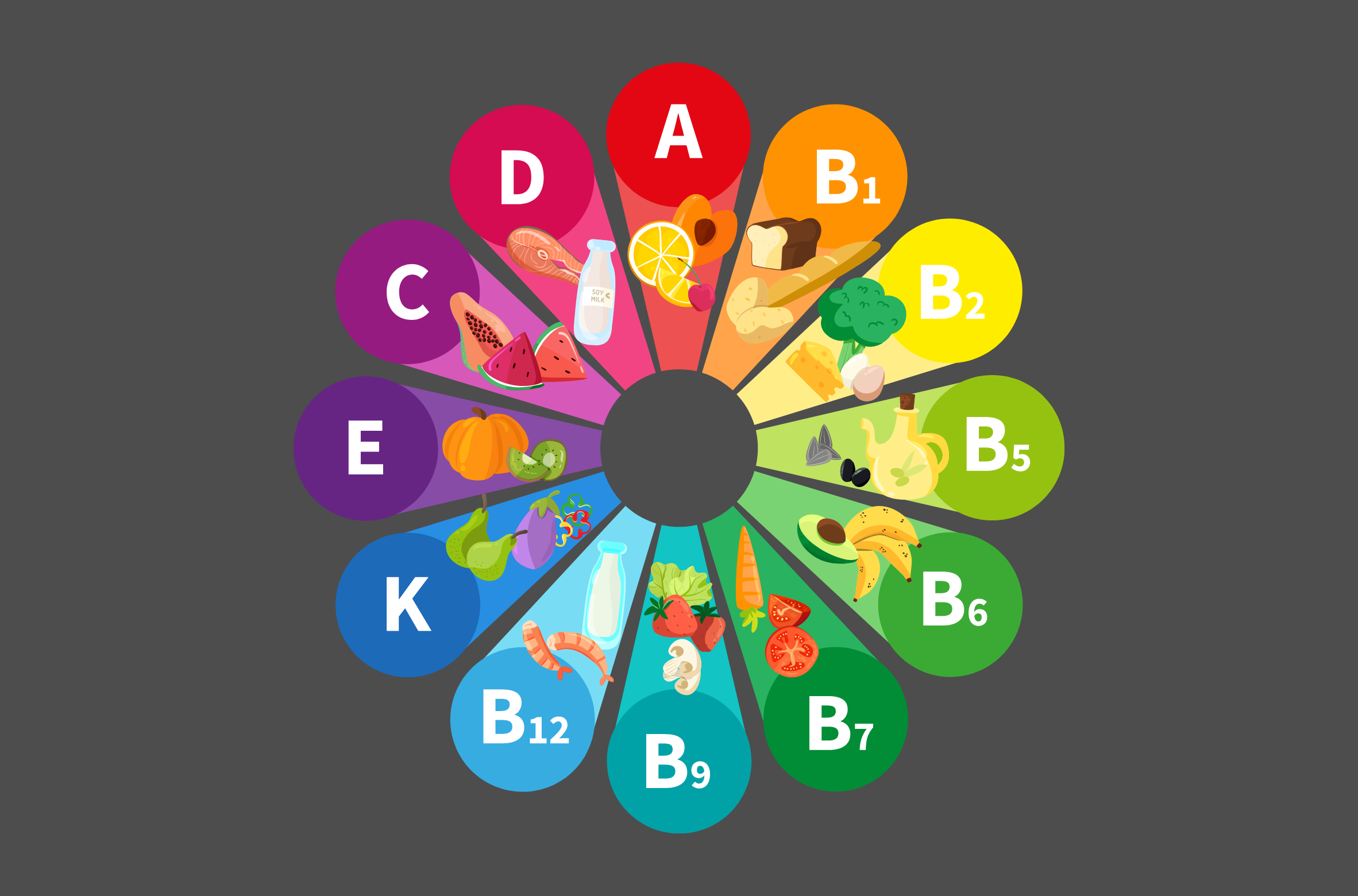
Vitamins are substances that are needed for a range of bodily functions, but that our bodies do not make. (One exception is vitamin D, which our skin makes from exposure to sunlight). This means we have to get them from food or supplements. Thirteen vitamins are considered essential for human health: A, C, D, E, K, and the B vitamins (thiamine, riboflavin, niacin, pantothenic acid, biotin, B6, B12, and folate).
Although vitamins are found in many different foods, here are some well-known examples:
- Vitamin A: carrots, tomatoes, milk.
- Important for vision, bone growth, reproduction, cell function, immune system.
- Vitamin C: citrus fruits, strawberries, cabbage
- Important for skin, bones, wound healing, iron absorption.
- Vitamin D: fatty fish like sardines and salmon. Our skin makes it from sunlight.
- Important for nerves, muscles, immune system, calcium absorption.
- Vitamin E: peanuts and sunflower seeds
- Important for immune system health and metabolic health.
- Vitamin K: green leafy vegetables such as kale, spinach, and collard greens
- Important for healthy bones and tissues.
- The eight B vitamins: many animal- and plant-based foods
- Important for a wide variety of functions, including making red blood cells.
Vitamins are generally categorized as either fat soluble or water soluble. One reason this matters is that the fat-soluble vitamins (A, D, E, K) are stored in our fat, which means they can build up and cause toxicity. Luckily, this is not common, but it means that people should be careful about taking vitamin supplements. (More is not always better.)
Water-soluble vitamins need to dissolve in water to work, but since the body is 60% water, this is not a problem. Excess amounts of these vitamins simply pass out of the body in urine.
Fun Fact: The colors of fruits and vegetables are the result of phytonutrients, which are natural compounds that help plants fight diseases, insects, and other environmental threats. Phytonutrients are not the same as vitamins, but foods that contain phytonutrients generally also contain vitamins. Antioxidants are one type of phytonutrient. They help cells fight damage. Vitamins A, C, and E are considered antioxidants.
Minerals are elements that are naturally found in the ground and in water, that our bodies need in small amounts. We also get these from foods we consume. Examples include calcium, sodium, potassium, iodine, and zinc.
Fun Fact:
Table salt is actually a combination of the minerals sodium and chloride. These are also electrolytes (see A Closer Look, below). Sodium is important for nerve and muscle function, but too much in your blood can cause high blood pressure—a risk factor for strokes, heart disease, and heart failure, among other health problems.
Pro Tip:
Most people get more than enough salt in their diet. The USDA recommends getting no more than a teaspoon per day (around 2,300 mg). But most Americans get around 3,400 mg! Processed/packaged food is a big source of salt. Check package labels to make sure you’re not getting way too much.
Food is one of the best ways to get vitamins and minerals, because the body absorbs them very effectively from food—plus there may be additional healthful nutrients, such as fiber, that are also present.
A Closer Look: Electrolytes
Electrolytes are substances that, when dissolved in water, have a positive or negative charge. Don’t let the definition intimidate you—you’ve already heard of electrolytes such as sodium, calcium, and magnesium. (Note that these are also minerals.)Electrolytes are important for many functions in the body. Sodium is important for keeping the right fluid balance in your body. Calcium, which is important for strong bones and teeth, also helps control your muscles. And magnesium helps your body turn food into energy. Because electrolytes are so essential to the body, doctors check electrolyte levels with several different tests, called “panels.” You may remember seeing the results from a basic or comprehensive metabolic panel, or an electrolyte panel. We lose electrolytes when we lose fluids: sweat, urine, diarrhea, vomiting. That’s why, when we get sick with things like stomach bugs, we are told to drink Gatorade or other fluids to prevent dehydration and replace those all-important lost electrolytes.
Sometimes, doctors will prescribe supplements for people who don’t get enough of a particular vitamin or mineral. (Supplements get their name from the fact that they supplement the diet.) For example, people who live in less-sunny places may be prescribed vitamin D supplements. Older people may be prescribed calcium, due to the bone loss that naturally occurs with aging (calcium is an important component of bones). Pregnant women may be prescribed folic acid (folate).
Pro Tip: You may have heard the expression, “Eat the rainbow.” This is a shorthand way to remember to eat a variety of colorful fruits and vegetables, in order to get a wide range of nutrients, including vitamins and minerals. It’s a lot easier to eat a variety of fruits and vegetables every day than to memorize tables of vitamins and minerals! (That said, we have included tables for people who like them, below.)
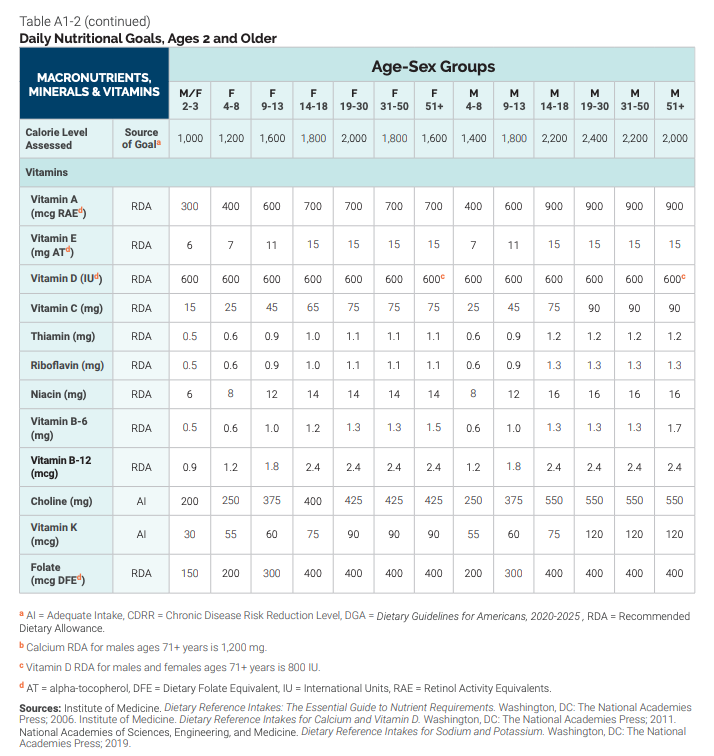
The USDA’s Dietary Guidelines for Americans 2020-2025 has tables with general vitamin and mineral recommendations:

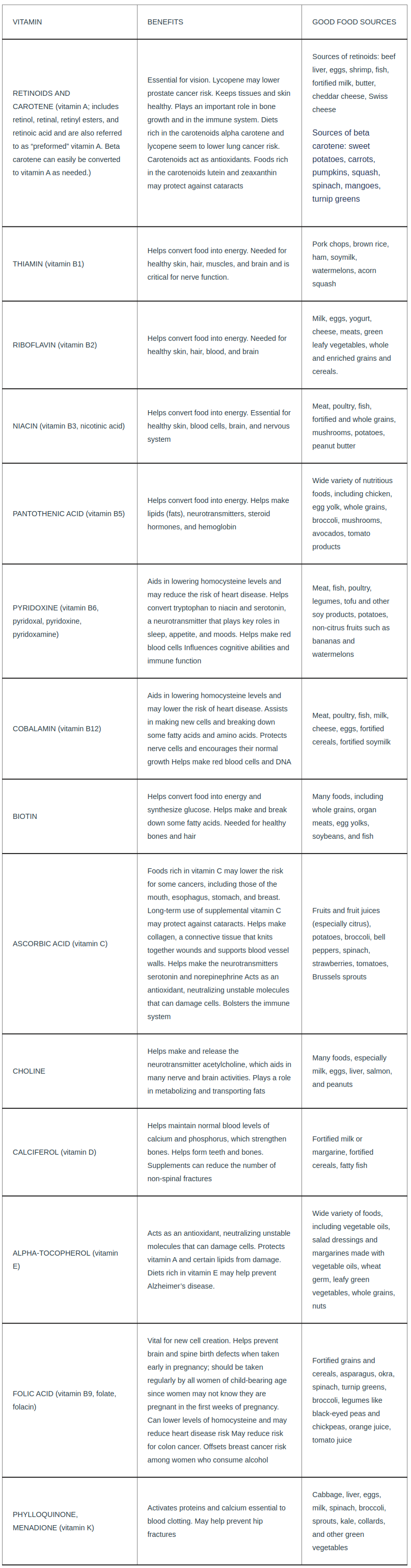
And here is a table from Harvard Medical School that shows the many critical functions of vitamins, as well as foods that contain them:
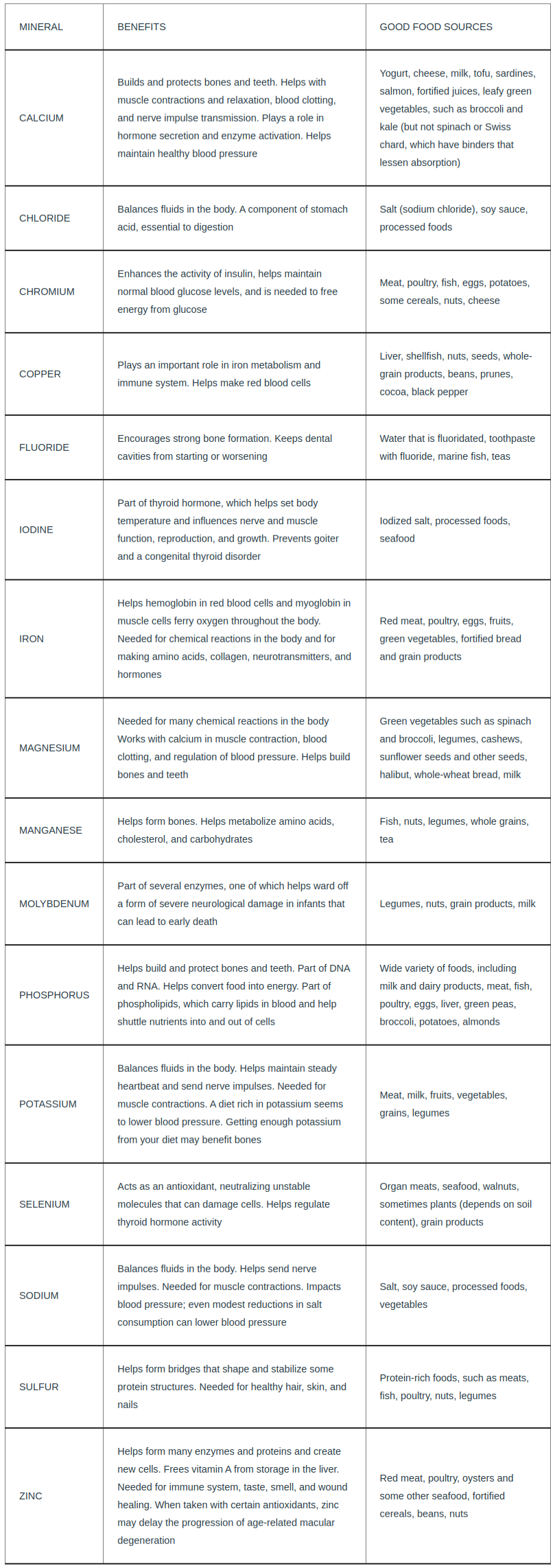
Here is a similar table from Harvard Medical School, showing the functions and food sources of minerals:
How Much Is Okay to Eat?
If all your sources of vitamins and minerals are from food alone, it’s very hard to overdose. Your body will use what it needs, and dispose of the rest. But if you are on any kind of prescription medication, check with your doctor about food-drug interactions. For example, the blood thinner medication warfarin can interact with certain foods and vitamins, like cranberry juice and vitamin E. Make sure to talk to your doctor about food-drug interactions for any medication you are taking.
Fun fact: Eating tons of carrots and other foods rich in beta-carotene (a vitamin A precursor) can tint your skin orange (a condition called carrotonemia), but it’s not harmful.
The Bottom Line
Eating a diet containing a variety lots of fruits and vegetables is the healthiest and safest way to get all the vitamins and minerals you need. But if you think you might need to take supplements, check with your doctor or a registered dietitian.
Sources:
Cedars-Sinai (electrolytes)
Cleveland Clinic (carrotonemia, electrolytes)
Harvard School of Public Health
Harvard Medical School (tables of vitamin and minerals functions, sources)
Mayo Clinic (high blood pressure, food-drug interactions)
US Dept of Agriculture (dietary guidelines, especially table on page 133)
USDA (phytonutrients and antioxidants, vitamins and minerals)